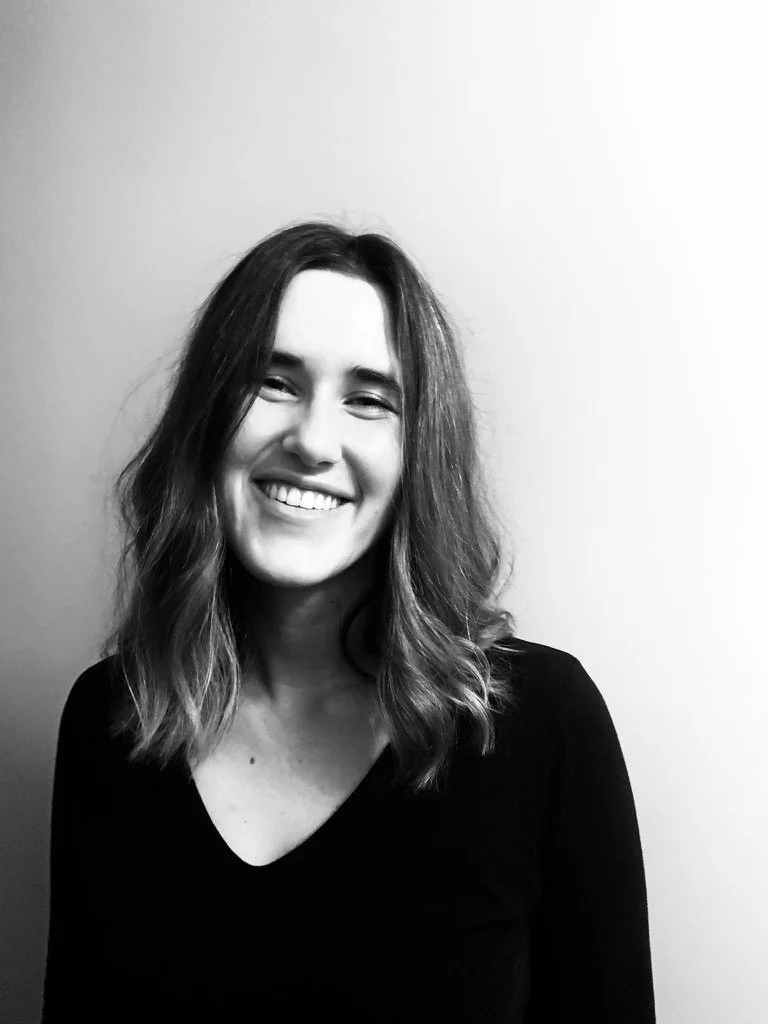
Jeanne has been building language models since before it was cool.
With nearly ten years of experience in language modelling and data science, spanning both industry and research, her focus has always been on multilingual and low-resource settings, where data is scarce, noisy, and rarely benchmark-ready. Her work has spanned healthcare, misinformation detection on social media, and real-world language understanding in underrepresented languages, with privacy and data protection as a consistent consideration throughout. More recently, her interests have extended into finance, specifically how language models can be used to extract signal from social media and news to model and anticipate market behaviour.
Her research has been published at ACL, including work on automating multilingual healthcare question answering in low-resource African languages. She approaches problems at the intersection of language, people, and systems, with a particular interest in making AI work in contexts it was never (or not yet) designed for.
Outside of work, she reads widely across behavioural economics, climate change, and misinformation and writes occasionally when something is worth saying.
Originally from Cape Town, Jeanne now lives in England with her husband and two Bengal cats, Eira and Kinzy.
Blog
Word Embeddings Explained: From Word2Vec to BERT and Beyond
Word embeddings models language by constructing dense vector representations of words that capture meaning and context, to be used in downstream tasks such as question-answering and sentiment analysis. This article explores the challenges of modelling languages, as well as the evolution of word embeddings, from Word2Vec to BERT.
Transformers: Age of Attention
In 2017, Google Brain researchers published a paper titled "Attention Is All You Need" and quietly changed the trajectory of AI. The Transformer architecture it introduced, built entirely on attention with no recurrence or convolutions, is the foundation of every large language model in use today. Here's how it actually works, from sequence-to-sequence models to multi-head attention.